


Cart actions
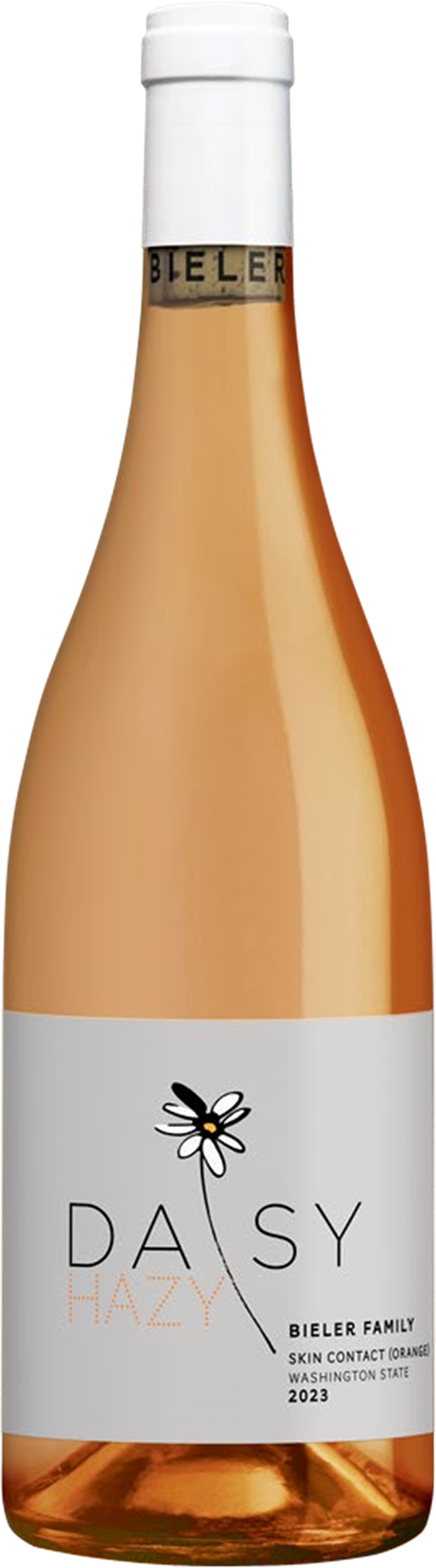
Bieler Family Daisy Skin Contact Orange Wine 2023
Pricing
¥3,520 (incl. tax)
Product description
The term ‘Orange wine’ is confusing and a little misleading, First of all it has nothing to do with oranges! The name refers to the color earned when white wine grapes are fermented with skins just as you would when making red wine. Like rosé, which can be dark pink or so pale that it’s hard to distinguish from white wine, there’s a big range of orange wine color. Amber is probably the better name and description for most orange wines and certainly the case with ours. Depending on the grapes used , the length of skin and stem contact and winemaking approach there will be a range of results. It should be noted that some winemakers of orange wine are ‘natural wine’ devotees and thus choose not to use sulfur dioxide at any point in the production. In our opinion that sounds fantastic but results in inconsistent bottles and experiences and a short life so we choose to use minimal amounts of sulfur as the very best orange winemakers do. In its best form orange wine can be absolutely captivating and like nothing you’ve ever tasted as there’s a depth of flavor and tannin structure that’s all it’s own.
Daisy is my youngest daughter and of the several gritty and visionary Daisys from my maternal lineage. While the wine is inspired by high toned, cold climate vineyards in Northern Italy, Bieler Family Daisy is an All-American original.
Product details sections
Details
- Country
- America
- Region
- Washington
- Appellation
- Washington State
- Winery
- Bieler Family Wines
- Vintage(s)
- 2023
- Color
- White
- Varietal(s)
- 58% Chardonnay, 15% Viogner, 15% Sauvignon Blanc, 12% Pinot Gris
Data
- Closure
- Cork
- Volume
- 750ml
- Alcohol
- 12.8%
- Product Code
- 1348323
- UPC
- 8 56622 00161 7
Owning & Enjoying
- Tasting notes
-
This wine offers aromas of orange peel, dried apricot, white peach, floral, potpourri, roasted nuts, hints of ginger and wild strawberry. The palate is full and rich with silky tannins.. As we have a dollop of pinot grigio which naturally has a pink hue, our Daisy Hazy has a slightly pinkish quality to the amber color.
Production
- Terroir
-
Matching up the vineyards so that the fruit would ripen at the same moment was a puzzle that required a few different vineyards. The majority of fruit came from the Golden West Vineyards, located between the Wahluke Slope and Ancient Lakes AVAs in Norther Columbia Valley. This vineyard is unique because it offers a mix of limestone, volcanic and sandy soils. While the remaining fruit came from Sunset, Homestead, and Art de Hoed vineyards located in the Yakima Valley. The use of several AVAs worked to our advantage coming together to create a wine filled with exotic floral beauty, heirloom fruits, spice and briny umami.
- Vintage Notes
-
After a string of challenging vintages, 2023 in Washington State led to unexpected success. A wet spring followed by a brief but hot summer that continued until the end of October. There were several moments of precipitation during the harvest period that kept us on our toes, even pushing harvest back almost 3 weeks. Despite the unprecedented rainfall, the quality of fruit that came in was excellent. All of our fruit is grown above 1,100 feets, which may not sound that high, but in Washington only 10% of the total vineyards planted are above that level. The elevation ensures gentle ripening, which allows complex flavor development and natural acidity without much alcohol.
- Vinification
-
We make this orange wine almost exactly as we do our red wines. For us that process starts with world class sustainable farming and low winemaker intervention in the winery. 15% of the fruit is left whole cluster, 85% destemmed. Fermentations are left to start by native yeasts so can take a few days to get going. Fermentations concluded after 15 days but we kept the wine, skins and stems together for another 20 days (35 days total on the skins). After the wine was pressed off it’s skins half went to old barrels and half to tank. To maximize the wines character we only lightly fined and filtered it which may add a hazy hue to the wine in your glass. Don’t be concerned!
Winery
- Winery Description
THE BIG IDEA
Bieler Family Born to Run is the culmination of Charles’ last 20 years – piecing together his origin story and tradition-bending blend of two states where he’s been producing wine for a decade-plus each. He had always remarked that the black fruit and structure of Washington Cabernet Sauvignon would be well complimented by the softer, lush, red fruit profile from California. Cross-state blending is rarely done in a quality way, but Charles is un-deterred.
THE WINE
This Cabernet Sauvignon is 100% American: 50% from the Columbia Valley in Washington State, 50% from California. The Washington State vineyards are located on the edge of Red Mountain in Columbia Valley – this sundrenched climate provides both the structure and finesse of the Old World, with the succulent ripe flavors of the New World. The Washington State fruit was fermented whole berry, and natively, with the wine was on the skins for 35 days – this allowed the wine to develop impressive density and a chewy structure. California vineyards are older vines on the west side of Lodi on the edge of the Delta, which allows for grapes with ripe fruit flavors, natural acidity and complexity. Our California component, which was aged in some oak after a traditional fermentation, is quite soft and luscious.
The result is a balanced Cabernet Sauvignon blended with some Syrah for depth and richness. A gorgeous blend that’s all its own and more complex than its parts. ABV 13.7%.
THE BIELER FAMILY
When he was 22, Charles Bieler dropped out of school, painted a 1965 Cadillac Deville pink, and drove it straight into a wine industry he knew nothing about. For two years he lived out of his Caddy, touring the country and selling his father’s rosé out of the trunk. Over 20 years later, and he still runs on that same passion and hustle. Born to Run is the culmination of this journey.